
Modular Game DeSSSvelopment: Buildin g Expandable Gaming

Description: An in-depth analysis of how modern game developers create scalable core engines that support infinite expansion through community modules and official systems.
Modular Game Development: The Foundation of Scalable Gaming
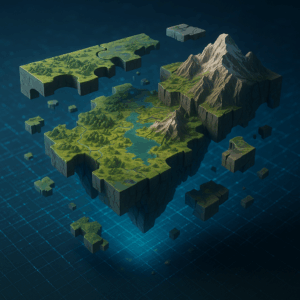
The gaming industry has witnessed a fundamental shift in how developers approach game architecture. Modern studios aren’t just building games — they’re constructing expandable ecosystems that can grow and adapt over years, sometimes decades. This modular approach creates opportunities for sustained player engagement, and interestingly, platforms like 1xbet Saudi Arabia have begun offering markets where players can wager on which community-created modules will achieve official adoption status, adding another layer of excitement to the development process.
Understanding Modular Architecture in Game Development
The concept of modular game development centers on creating a robust core engine that serves as the foundation for unlimited expansion. Game engine architecture principles demonstrate how this approach differs from traditional development methods.
Key components of successful modular gaming systems include:
- Core engine optimization that supports multiple expansion types without performance degradation
- Standardized API frameworks that allow third-party developers to create compatible modules seamlessly
- Community marketplace integration where creators can distribute and monetize their contributions
- Version control systems that maintain compatibility across different module combinations
- Automated testing protocols that verify new modules don’t break existing functionality
This architectural approach has proven successful across various game genres. Bethesda’s Creation Engine, for instance, has supported thousands of community modifications for titles like Skyrim and Fallout, extending their lifespan far beyond typical gaming cycles.
Community-Driven Expansion and Market Dynamics
The relationship between official developers and community creators has become increasingly sophisticated. Community game development economics reveals how this collaboration creates sustainable revenue streams for both parties.
What makes this particularly interesting is how prediction markets have emerged around community development. Some platforms now offer wagering opportunities on which fan-created content will receive official recognition or integration. This creates an unexpected feedback loop where community sentiment can influence both development priorities and market dynamics.
The numbers tell a compelling story. Games with robust modding communities typically maintain active player bases 300% longer than their non-modular counterparts. Minecraft’s success exemplifies this — its modding ecosystem has generated over $500 million in community-driven economic activity, with some individual modders earning six-figure incomes from their creations.
Technical Implementation and Industry Standards
Building truly modular games requires careful consideration of technical architecture from day one. You can’t simply bolt modularity onto an existing system — it needs to be foundational. The most successful implementations use plugin-based architectures where core game functions remain isolated from expansion content.
Unity’s package manager system represents one approach to this challenge. It allows developers to compartmentalize features into discrete packages that can be updated independently. But there’s a catch — maintaining backward compatibility becomes increasingly complex as the module ecosystem grows.
From my perspective, the most elegant solutions combine strict interface standards with flexible implementation details. This gives module creators freedom to innovate while protecting the core game experience from instability.
The financial implications are significant. Studios that successfully implement modular architectures can reduce development costs by up to 40% for sequel projects, since much of the core infrastructure can be reused and simply extended with new modules.
Future Directions and Emerging Opportunities
The trajectory of modular game development points toward even greater integration between official and community-created content. Machine learning algorithms are beginning to evaluate community modules for quality and compatibility, potentially automating the curation process that currently requires significant human oversight.
What’s particularly fascinating is how blockchain technology might influence this space. Smart contracts could automate revenue sharing between original developers and module creators, while also providing transparent tracking of module performance metrics.
The prediction market angle adds another dimension worth considering. When communities can literally bet on the success of different development directions, it creates unprecedented market research opportunities. Developers can gauge genuine enthusiasm for proposed features based on actual financial commitment rather than forum polls or surveys.
I believe we’re approaching a point where the distinction between developer and player will continue to blur. Games are becoming platforms, and players are becoming co-creators in ways that weren’t possible just a decade ago.
Looking ahead, the studios that master modular development will likely dominate the gaming landscape. They’ll create not just games, but entire ecosystems that can adapt, grow, and surprise even their original creators. The question isn’t whether modular development will become the standard — it’s how quickly traditional studios can adapt to this new paradigm.
This shift represents more than just a technical evolution; it’s a fundamental reimagining of what games can be when they’re designed from the ground up to grow beyond their creators’ original vision.